

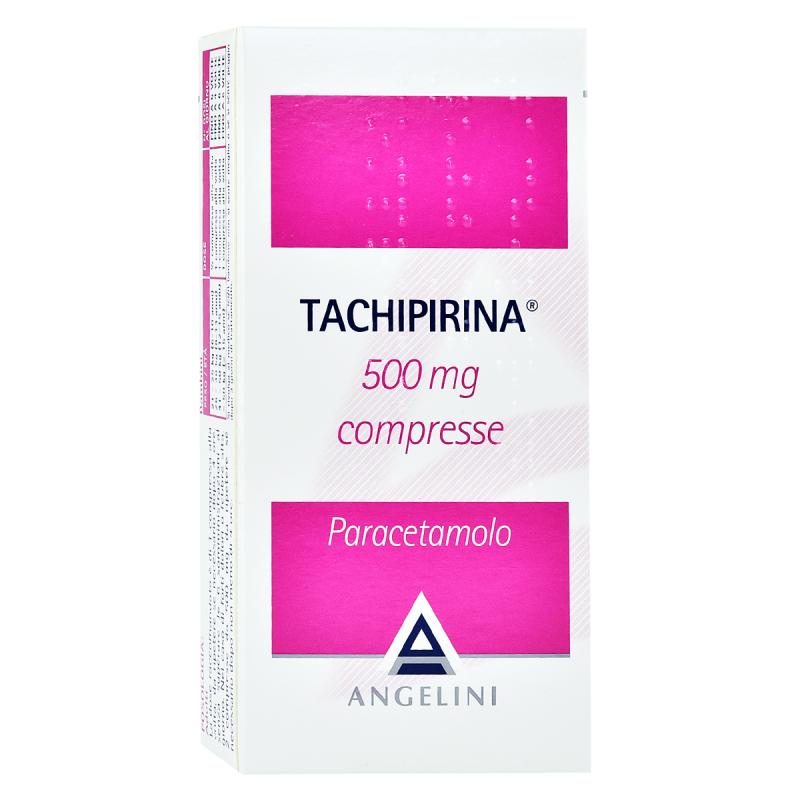
Tachipirina 500 mg tablets (paracetamol)
Price:493.00L
Tablets that contains 500 mg paracetamol
Box x 20 tablets
Stock: In stock
Additional information
| Action | |
|---|---|
| Brand | |
| Formulimi | |
| Masa | 20 tableta |
| Suitable For |
1. What is Tachipirina and why it is used for?
Tachipirina contains the active ingredient paracetamol which works by reducing fever (antipyretic) and relieving pain (analgesic).
Tachipirina is used in adults, adolescents and children for:
– the symptomatic treatment of feverish states such as flu, exanthematous diseases (infectious diseases typical of children and adolescents), acute diseases of the respiratory tract, etc.
– pain of various origins and nature (headache, neuralgia, muscle pain and other painful manifestations medium-sized).
Talk to your doctor if you / your child do not feel better or if they feel worse after 3 days of treatment.
2. What you need to know before you use Tachipirina
Do not use Tachipirina
– if the person taking the medicine is allergic to paracetamol or any of the other ingredients of this medicine.
Warnings and Precautions
Talk to your doctor or pharmacist before using Tachipirina.
Tachipirina should be used with caution in persons who:
– chronically use alcohol or overuse it (3 or more alcoholic drinks per day);
– suffer from anorexia (eating disorder characterized by lack or reduction appetite);
– suffer from bulimia (eating disorder in which a person swallows a quantity of excessive food and then resorting to different methods to eliminate it);
– suffer from cachexia (a state characterized by extreme thinness, reduction of muscle mass and thinning of the skin due to chronic diseases);
– has been following an incorrect diet for a long time (chronic malnutrition);
– suffer from dehydration (severe loss of water / fluids from the body);
– suffer from hypovolaemia (reduced volume of blood circulating);
-suffer from liver diseases that reduce its function (liver failure, hepatitis, syndrome of
Gilbert)
– you are being treated concomitantly with medicines that alter liver function (see “Others
medicines and Tachipirina “)
– suffer from glucose-6-phosphate dehydrogenase deficiency (a substance normally present in the human body, whose deficiency can cause a blood disease)
– suffer from haemolytic anemia (destruction of red blood cells).
Use of high doses and / or for prolonged periods
The use of high and / or prolonged doses of this medicine can cause even serious alterations to the kidney and blood. In these cases, the doctor will check the functionality over time, through appropriate tests liver, kidney and blood composition. Before taking this medicine, tell your doctor if those who are to take the medicine have kidney or liver disease.
Children and adolescents
Tachipirina can be given to children and adolescents.
Other medicines and Tachipirina
Tell your doctor or pharmacist if you are taking or have recently taken or might take any other medicine.
In particular, tell your doctor if whoever is taking the medicine is taking:
– medicines that contain paracetamol. During treatment with paracetamol before taking or give the child any other medicines, be sure that they do not contain paracetamol, because
paracetamol taken in high doses can cause serious side effects;
– medicines that slow stomach emptying (e.g. anticholinergics, opioids), as these medicines delay the effect of Tachipirina;
– medicines that accelerate stomach emptying (e.g. prokinetics), as these medicines accelerate the effect of Tachipirina;
– cholestyramine (medicine used to reduce cholesterol levels in the blood), as it reduces the effect of paracetamol;
– chloramphenicol (an antibiotic), as it can increase the risk of side effects;
– anticoagulants (medicines used to thin the blood). In the case of treatments with doses of paracetamol 4 g per day for at least 4 days, take or give your child Tachipirina only under strict medical supervision;
– rifampicin (an antibiotic);
– cimetidine (a medicine used in the treatment of stomach ulcer);
– antiepileptics (medicines used to treat epilepsy), for example glutethimide, phenobarbital, carbamazepine;
– zidovudine (medicine for the treatment of HIV).
The use of these medicines with Tachipirina requires medical supervision.
Interference with blood tests
If the person taking the medicine has to carry out blood tests, take into account that the administration of paracetamol can interfere with the determination of uricemia and blood glucose.
Tachipirina with alcohol
Take Tachipirina with caution if you chronically use alcohol or overuse it (3 or more drinks alcohol per day), as there is a risk of intoxication (see sections “Warnings and precautions”
and “If you use more Tachipirina than you should”).
Pregnancy and breastfeeding
If you are pregnant, think you may be pregnant or are planning to become pregnant, or if you are breast-feeding mother, ask your doctor or pharmacist for advice before taking this medicine.
If necessary, Tachipirina can be used in pregnancy. It is advisable to use the lowest possible dose that reduces pain and / or fever and take it for as short a time as possible. Contact your doctor if pain and / or your fever does not subside or if you need to take the medicine more often.
This medicine can be taken during breastfeeding only if clearly needed and under the doctor’s check.
Driving and using machines
Tachipirina does not affect the ability to drive or use machines.
If you use more Tachipirina than you should
In case of accidental ingestion / intake of an overdose of Tachipirina immediately notify the doctor or contact the nearest hospital.
Symptoms
In case of accidental intake of very high doses of paracetamol, the symptoms usually she / the baby could manifest within the first 12 to 48 hours include:
– anorexia (lack or decreased appetite), nausea and vomiting followed by profound decay of the general conditions;
– changes in blood laboratory values (increased blood bilirubin, lactic dehydrogenase, liver transaminase levels, decreased blood prothrombin levels);
– liver damage which can lead to coma and death.
Taking an excessive dose of paracetamol increases the risk of intoxication and can lead to death, especially in the following cases:
• if the person taking the medicine has liver disease;
• chronic alcoholism;
• if the person taking the medicine has been following an incorrect diet for a long time (malnutrition chronic);
• if the person taking the medicine is taking other medicines or substances that increase function liver.
Treatment
Based on the nature and severity of the symptoms, the doctor will carry out appropriate supportive therapy.
If you forget to use Tachipirina
Do not use a double dose to make up for a forgotten dose.
If you stop taking Tachipirina
If you have any further questions on the use of this medicine, ask your doctor or pharmacist.
4. Possible side effects
Like all medicines, this medicine can cause side effects, although not everybody has them
manifest.
If you / your child experience the following side effects STOP treatment with this medicine and contact your doctor immediately:
• allergic reactions with:
– redness of the skin accompanied by itching (hives)
– swelling of the throat (larynx edema)
– swelling of the hands, feet, ankles, face, lips, tongue and / or throat (angioedema)
– severe allergic reaction (anaphylactic shock).
Also, those taking the medicine may experience the following side effects, for which they are not sufficient data available to establish frequency:
• reduction in the number of platelets in the blood (thrombocytopenia)
• reduction in the number of white blood cells in the blood (leukopenia / agranulocytosis)
• reduction of hemoglobin in the blood, a substance that carries oxygen in the blood (anemia)
• dizziness
• stomach and intestinal disorders
• abnormal liver function
• inflammation of the liver (hepatitis)
• red spots, bullous lesions with areas of peeling of the skin, blisters, skin rashes (erythema multiforme, Stevens Johnson syndrome, toxic epidermal necrolysis)
• reduced kidney function (acute renal failure)
• inflammation of the kidneys (interstitial nephritis)
• blood in the urine (haematuria)
• cessation or reduction of urine production (anuria).
Very rare cases of severe skin reactions have been reported.
Reporting side effects
If you get any side effects, talk to your doctor. This includes any possible side effects not listed in this leaflet doctor or pharmacist. You can also report side effects directly via the national system reporting at https://www.aifa.gov.it/content/segnalazioni-reazioni-avverse.
By reporting side effects you can help provide more information on the safety of this medicine.
5. How to store Tachipirina
Keep this medicine out of the sight and reach of children.
Do not use this medicine after the expiry date which is stated on the carton after EXP
expiry refers to the last day of that month.
The half tablet can be stored for 24 hours in the original packaging.
This medicine does not require any special storage conditions.
This is an OTC drug, so it can be taken without a doctor’s recommendation.
Before using this medicine read carefully the package leaflet as it contains more detailed information.
For any uncertainty consult your doctor or pharmacist.
Always use this medicine exactly as stated in this leaflet or the instructions of the doctor or pharmacist. If in doubt, consult your doctor or pharmacist.
Adults
The recommended dose is 1 tabletat a time, to be repeated if necessary after 4 hours, without exceeding 6 doses per day.
In the case of severe pain or high fever, 2 tablets of 500 mg to be repeated if necessary after no less than 4 hours.
In adults, the maximum oral dose is 3000 mg of acetaminophen per day.
Use in children and adolescents
For children it is essential to respect the dose defined according to their body weight, the doctor will indicate the most suitable formulation based on the child’s body weight.
The tablet can be halved.
Children aged 6-10 years weigh approximately 21-25 kg and can consume 1/2 of Tachipirin 500 mg tablet. The dose can be repeated every 4 hours if necessary. No more than 6 doses per day should be given. The maximum dose is 3 tablets in 24 hours.
Children aged 8-13 years weigh approximately 26-40 kg and can consume 1 tablet of 500 mg Tachipirin. The dose can be repeated every 6 hours if necessary. Do not take more than 4 doses a day, so the maximum daily dose is 4 Tachipirine 500 mg tablets.
Children aged 12-15 years weigh approximately 41-50 kg and can take 1 tablet of 500 mg Tachipirine. The dose can be repeated after 4 hours if necessary. The maximum daily dose is 6 tablets. Do not exceed this dose.
Children over 15 years of age weigh approximately 50 kg and may take 1 tablet of 500 mg Tachipirine. The dose can be repeated every 4 hours if necessary. The maximum daily dose is 6 tablets. Do not exceed this dose.
For children weighing less than 21 kg, there are other pharmaceutical forms of Tachipirin. Consult your doctor or pharmacist.
If the child suffers from severe renal insufficiency (decreased renal function), diagnosed by the doctor, the dosing interval should be at least 8 hours.
Duration of treatment
Do not use Tachipirin for more than 3 consecutive days without consulting your doctor. The doctor judges whether the treatment should continue for more than 3 consecutive days.
paracetamol, microcrystalline cellulose, povidone, pregelatinised starch, stearic acid,
croscarmellose sodium